
Search results
 R40187
Transport for Wales, Mk4 Standard, 12447
 'OO' Gauge
 Released: 17/08/22
 Era 11
Our Price:
£40.49
£40.49
R40187ATransport for Wales, Mk4 Standard, 12454
'OO' GaugeReleased: 17/08/22Era 11
Our Price:
£40.49
£40.49
 37-625A
BRA Steel Carrier EWS
'OO' GaugeReleased: 29/08/22Era 9
Our Price:
£44.95
£44.95
37-629ABRA Steel Carrier (Ex-EWS) DB Schenker [W]
'OO' GaugeReleased: 29/08/22Era 10
Our Price:
£48.55
£48.55
37-712D8T Cattle Wagon BR Bauxite (Late)
'OO' GaugeReleased: 29/08/22Era 5
Our Price:
£26.05
£26.05
 377-328C
Conflat Wagon BR Bauxite (Early) with BR Crimson BD Container [W, WL]
'N' GaugeReleased: 29/08/22Era 4/5
Our Price:
£22.45
£22.45
377-330Conflat Wagon BR Bauxite (Early) with 'Pickfords' BD Container [WL]
'N' GaugeReleased: 29/08/22Era 4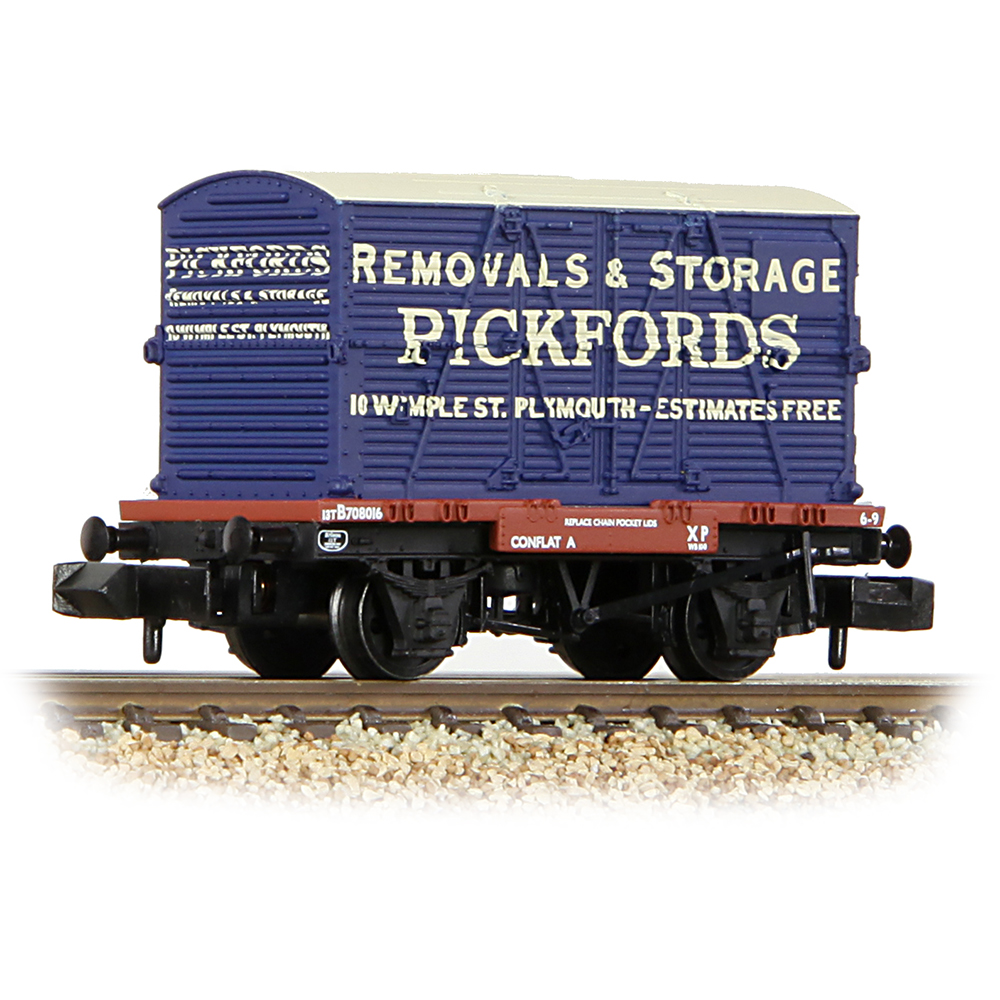
Our Price:
£20.65
£20.65
377-331Conflat Wagon BR Bauxite (Early) with 'Door-To-Door' BD Cont. [W, WL]
'N' GaugeReleased: 29/08/22Era 5/6
Our Price:
£22.45
£22.45
377-340BConflat Wagon BR Bauxite (Early) with 2 BR White AF Containers [W, WL]
'N' GaugeReleased: 29/08/22Era 4
Our Price:
£24.25
£24.25
377-343BR Ex-Conflat Runner Wagon BR Yellow & Black Wasp Stripes
'N' GaugeReleased: 29/08/22Era 7
Our Price:
£17.95
£17.95
38-701ABR 12T Pipe Wagon BR Bauxite (Late) [W]
'OO' GaugeReleased: 29/08/22Era 5
Our Price:
£31.45
£31.45
38-703BR 12T Pipe Wagon BR Bauxite (TOPS)
'OO' GaugeReleased: 29/08/22Era 7
Our Price:
£28.75
£28.75
38-752ABR 22T Tube Wagon BR Bauxite (Late) [W]
'OO' GaugeReleased: 29/08/22Era 5
Our Price:
£37.75
£37.75
38-753BR 22T Tube Wagon BR Bauxite (TOPS)
'OO' GaugeReleased: 29/08/22Era 7
Our Price:
£35.95
£35.95
39-780LMS 50ft Inspection Saloon LMS Crimson Lake
'OO' GaugeReleased: 29/08/22Era 3
Our Price:
£80.95
£80.95
39-781LMS 50ft Inspection Saloon BR Crimson & Cream
'OO' GaugeReleased: 29/08/22Era 4
Our Price:
£80.95
£80.95
39-78250ft Inspection Saloon BR InterCity (Swallow)
'OO' GaugeReleased: 29/08/22Era 8
Our Price:
£80.95
£80.95
R30046RailRoad Plus ROG, Class 47, Co-Co, 47812
'OO' GaugeReleased: 07/09/22 DCC Ready (8 Pin)Era 11
Built between 1962 and 1968, the Class 47 Co-Co Diesel-Electric locomotive was once the most numerous class of mainline diesel in Britain with 512 examples. 310 locomotives were constructed by Brush in Loughborough, and the remaining 202 at Crewe. The locomotives were used for passenger and freight operations. In 2020, 24 of the class remain operational on the national network with more in storage and an additional 31 preserved.
Between 2016 and 2017, ROG purchased a total of five Class 47 locomotives from Riviera Trains and Direct Rail Services to complement their Class 37s. The first Class 47 obtained was No. 47812 which was modified at Arlington Fleet Services' Eastleigh Works, including the fitting of Dellner couplings to enable the haulage of EMUs. The locomotive was built in 1965 and had previously served with Virgin Trains and Riviera Trains.

Our Price:
£87.29
£87.29
R3850BR, 61XX Class 'Large Prairie', 2-6-2T, 6147
'OO' GaugeReleased: 12/09/22DCC Ready (8 Pin)Era 5In 1903, George Churchward, Chief Mechanical Engineer of the Great Western Railway, embarked upon his locomotive improvement scheme with three types of 'standard' class engines, of which his 2-6-2T design was destined to become probably the GWR's most useful locomotive, lasting in traffic until the last month of Western Region steam operations in December 1965.
The Class prototype, No. 99, spent two years working across the GWR system and the lessons learnt from its performance were incorporated into the thirty-nine production locomotives of the 3100 Class, introduced during 1905/1906. At eighteen tons, they were designated as red route engines, initially being able to cover 42% of the GWR network. In 1927 experiments were undertaken to reduce the weight distribution of the class leading to the locomotives gaining blue route clearance and being renumbered in the 5111-5149 range, changing the class designation to 5100 in the process. At the same time as the 3100 class locomotives were being converted to 5100 class, further locomotives to the same design and blue route designation were built, designated as the 5101 class. 140 locomotives were built between 1929 and 1949, incorporating all the modifications applied to the 3100 class.
The need for new locomotives to work accelerated London suburban services at the beginning of the 1930s led to further development of the 5101 class, an uprated Standard 2 boiler being fitted to seventy new locomotives built between 1931 and 1935. Numbered in the 6100- 6169 range, they were designated as the 6100 class, being stationed at every London depot and replacing all other passenger tank locomotives except the auto-train fitted engines. It was only the reorganisation of the London suburban timetables in 1955 that led to some locomotives being transferred away from London and it was these examples that survived to the end of steam on the Western Region.
Built at Swindon Works under Lot No. 278 in January 1933, Diagram A10 Class 6100 'Large Prairie' No. 6147 entered traffic with the London Division, remaining there until 3 December 1960. From London, 6147 was moved to Bristol, first at St. Philips Marsh and then at Bristol Barrow Road, before moving to Westbury in November 1963 and the locomotive ended its working life at 85A Worcester Shed in January 1966, having moved there in January 1964.

Our Price:
£160.19
£160.19
R3851BR, 51XX Class 'Large Prairie', 2-6-2T 5189
'OO' GaugeReleased: 12/09/22DCC Ready (8 Pin)Era 4In 1903, George Churchward, Chief Mechanical Engineer of the Great Western Railway, embarked upon his locomotive improvement scheme with three types of 'standard' class engines, of which his 2-6-2T design was destined to become probably the GWR's most useful locomotive, lasting in traffic until the last month of Western Region steam operations in December 1965.
The Class prototype, No. 99, spent two years working across the GWR system and the lessons learnt from its performance were incorporated into the thirty-nine production locomotives of the 3100 Class, introduced during 1905/1906. At eighteen tons, they were designated as red route engines, initially being able to cover 42% of the GWR network. In 1927 experiments were undertaken to reduce the weight distribution of the class leading to the locomotives gaining blue route clearance and being renumbered in the 5111-5149 range, changing the class designation to 5100 in the process. At the same time as the 3100 class locomotives were being converted to 5100 class, further locomotives to the same design and blue route designation were built, designated as the 5101 class. 140 locomotives were built between 1929 and 1949, incorporating all the modifications applied to the 3100 class.
The need for new locomotives to work accelerated London suburban services at the beginning of the 1930s led to further development of the 5101 class, an uprated Standard 2 boiler being fitted to seventy new locomotives built between 1931 and 1935. Numbered in the 6100- 6169 range, they were designated as the 6100 class, being stationed at every London depot and replacing all other passenger tank locomotives except the auto-train fitted engines. It was only the reorganisation of the London suburban timetables in 1955 that led to some locomotives being transferred away from London and it was these examples that survived to the end of steam on the Western Region.
Built at Swindon Works under Lot No. 278 in January 1933, Diagram A10 Class 6100 'Large Prairie' No. 6147 entered traffic with the London Division, remaining there until 3 December 1960. From London, 6147 was moved to Bristol, first at St. Philips Marsh and then at Bristol Barrow Road, before moving to Westbury in November 1963 and the locomotive ended its working life at 85A Worcester Shed in January 1966, having moved there in January 1964.

Our Price:
£160.19
£160.19